About Jain Mool Sangh
Jain Mool Sangh is a Non-profit Tax-Exempt Organization under IRS Code Section 501(c)(3) EIN# 39-3362860
JMS community follows mool practices of Jainism. Mool refers to the "root" or original, orthodox path, typically associated with the Digambar tradition. It emphasizes adhering to the traditional, non-violent practices, with respect to the worship of idols and the conduct of monks.
Our Mission
At Jain Mool Sangh, our mission is to preserve and practice the core principles of the Digambar Jain tradition in their most authentic form. We seek to provide a spiritually pure environment for worship, learning, and self-discipline, ensuring that the foundational values, rituals, and conduct of the Digambar path are preserved for present and future generations.
We envision building state-of-the-art Digambar jain temples in North America, guided by learned experts and supported by dedicated donors, that empowers our community to pursue deep religious practice and spiritual growth.
Our Values

AHIMSA
(Live and let live)
Jainısm assigns the greatest importance to the principle of ahımsa (non-violence) in lfe It occupies the foremost place amongst all virtues so much so that it is regarded as 'the divine principle or supreme law of this world' Ahimsa, observes Albert Einstein, 'is essential if mankınd is to survive and move toward higher levels'.

APARIGRAHA
(Voluntary Limitation of Wants and Possessions)
While the source of peace and happiness les within the human self and not in external things, a man devoid of enlightened vision identifies happiness with possessiveness. Mahavira's prescription for peace and happiness was the limitation of desires and nonattachment to worldly objects. Desires, he says, are 'endless lıke the sky and they will never satısfy any person fully. The more you get, the more you want. Desires increase with every gain'.

ANEKANT-VAAD
(Jain Relativism)
The concept of anekant-wad forms the cornerstone of Jain philosophical thinking. Etymologically, anekant-wada can be explained in two ways: (1) un + eka + anta + vada, i.e. not-oneside or viewpoint, theory or phlosophic position. In other words, It signifies pluralty of characteristics of a real or the object of knowledge The theory of many sidedness or manifoldness of reality, implies that in order to arrive at truth one should take into account 'all possible angles of vision regardıng any object or idea'; and (2) un + ekanta + vaad, i.e. not-one-sided-theory.
Our Journey
Chaityalaya Planning Started
Started the construction of the Jain Mool Sangh Chaityalaya in Parker, CO.
Temple Property Closing
Jain Mool Sangh successfully closed on the 5+ acres temple property in Parker, CO.
JMS Non-Profit recognition
Jain Mool Sangh as a Colorado-registered non-profit organization, officially approved by the IRS.
JMS Founded
Recognized need of a separate Digambar non-profit in Colorado.
Executive Committee
Meet our dedicated team of volunteers leading the way

Mr. Dhiraj Soni
President
Leading with wisdom and dedication
20+ years contributing to Samaj

Mr. Rohit Jain
Vice President
Organizing process and outreach
10+ years contributing to Samaj

Mr. Sachin Jain
Secretary
Handling crucial organization Correspondence and Operations
12+ years contributing to Samaj
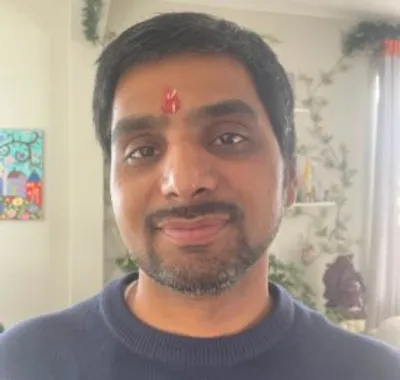
Mr. Pankaj Jain
Treasurer
Managing Financial assets and liabilities
10+ years contributing to Samaj